


Every fabric sleeps differently. Some people want cool and crisp. Others want silky and smooth. Some want sheets that look better the more you use them. There’s no wrong answer, we all just simply have the one that fits how we sleep.
We make bedding in five fabrics, all produced in our own OEKO-TEX® certified facilities, which are the same ones that manufacture for some of the most recognized home goods brands in the country. Here’s what you actually need to know about each one.
Quick Decision Guide
I sleep HOT, what should I get?
Organic Percale (crisp and cool) or Tencel (soft and cooling).
I sleep COLD, what should I get?
Luxury Sateen (smooth and warm).
I want sheets with personality that improve over time
French Linen.
I have sensitive skin or allergies
Tencel Lyocell.
I want better hair and skin while I sleep
Mulberry Silk pillowcase.
I want the hotel bed experience
Organic Percale.
I care about sustainability
Tencel (closed-loop production) or Organic Percale (GOTS certified).
I’m buying a gift, what should I get?
Silk Pillowcase + Eye Mask. Trust us on this one.
I have no idea what to get...
Organic Percale. It works for almost everyone, it’s our most versatile fabric, and at that price it’s the lowest-risk way to find out what you like. You’ll know what to try next.
The short version
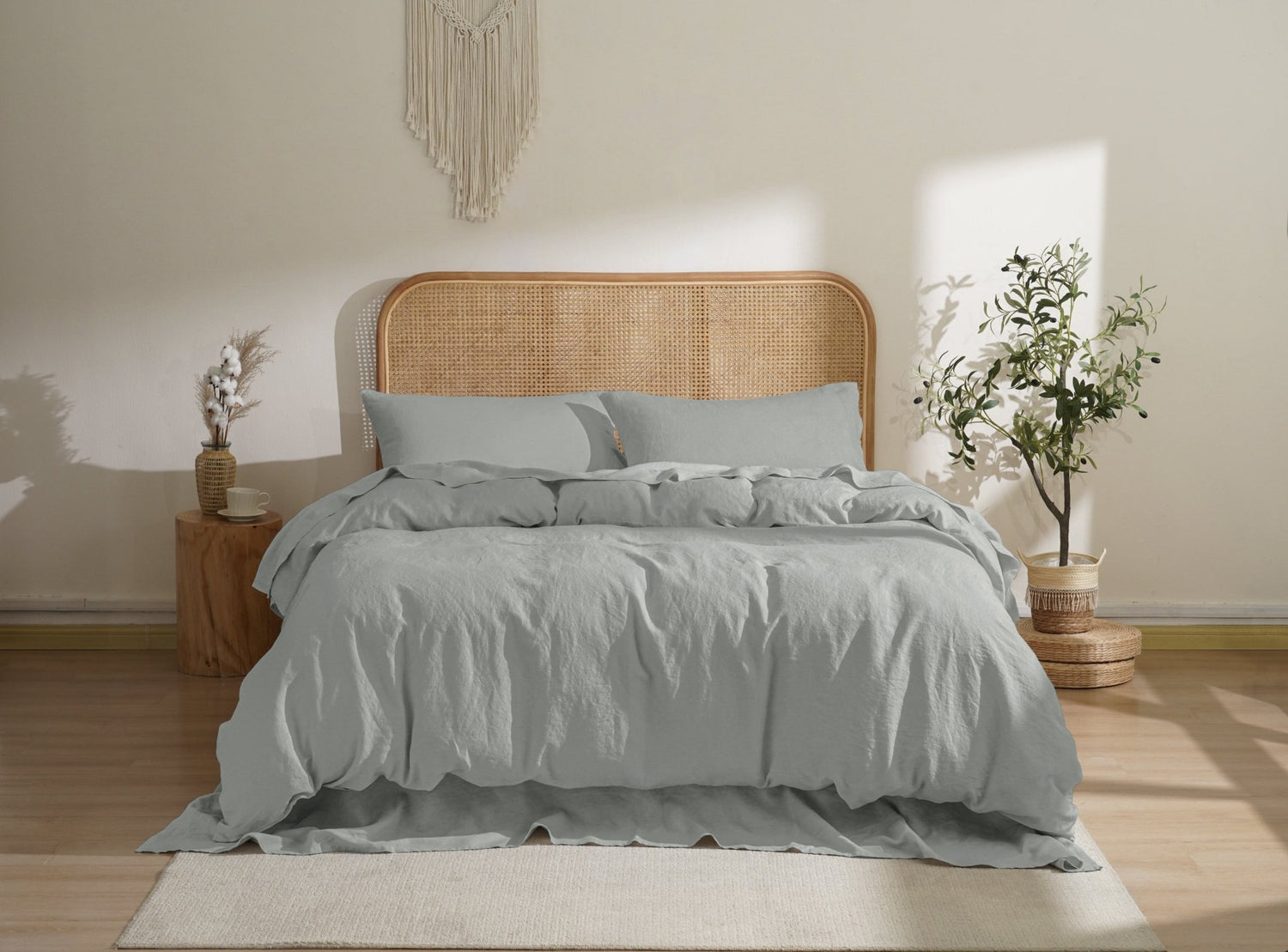
French linen is the lived-in, effortlessly beautiful fabric you’ve seen in every design magazine for the last decade. It’s textured, breathable, and actually improves with use — softer after every wash, more character with every year.
How it feels
Fresh out of the package, linen has a slight crispness and a natural texture. It’s not the silky-smooth experience you get from sateen — it’s more relaxed, like a perfectly broken-in cotton t-shirt. By the third or fourth wash, it softens dramatically. By month six, it feels like it was made for you. No other fabric does this. Cotton starts good and stays about the same. Linen starts good and gets better.
Who should buy this
If you care about how your bedroom looks, linen is the answer. It photographs beautifully, it drapes with that effortless rumple that you can’t fake with any other fabric, and it works twelve months a year because the hollow fibers trap warmth in winter and release heat in summer. It’s also for people who hate ironing, because you’re not supposed to iron it. The wrinkles are the whole point.
Temperature
Linen is naturally thermoregulating. The hollow fiber structure means it breathes in ways cotton physically can’t. If you live somewhere with real seasons, linen handles all of them without ever feeling clammy or stuffy. It’s the reason linen has been the go-to fabric in Mediterranean climates for literally thousands of years.
What makes ours worth it
Our linen starts with European flax — the same raw material that high-end French and Belgian linen houses use. The flax gets processed and woven in our family’s own facilities, which means we control every step from raw fiber to finished product. Most “French linen” brands buy finished fabric from a mill and sew it into sheets. We make the fabric.
How to care for it
Wash cold or warm, gentle cycle. Tumble dry low. Pull them out slightly damp if wrinkles bother you, but honestly, nobody who buys linen irons it. The one thing to remember: skip the fabric softener. It coats the fibers and actually slows down the softening process. Linen wants to be left alone. It rewards you for it.
Our French Linen products: Sheet Set from USD$120 | Sheet & Duvet Cover Set from USD$256
The short version
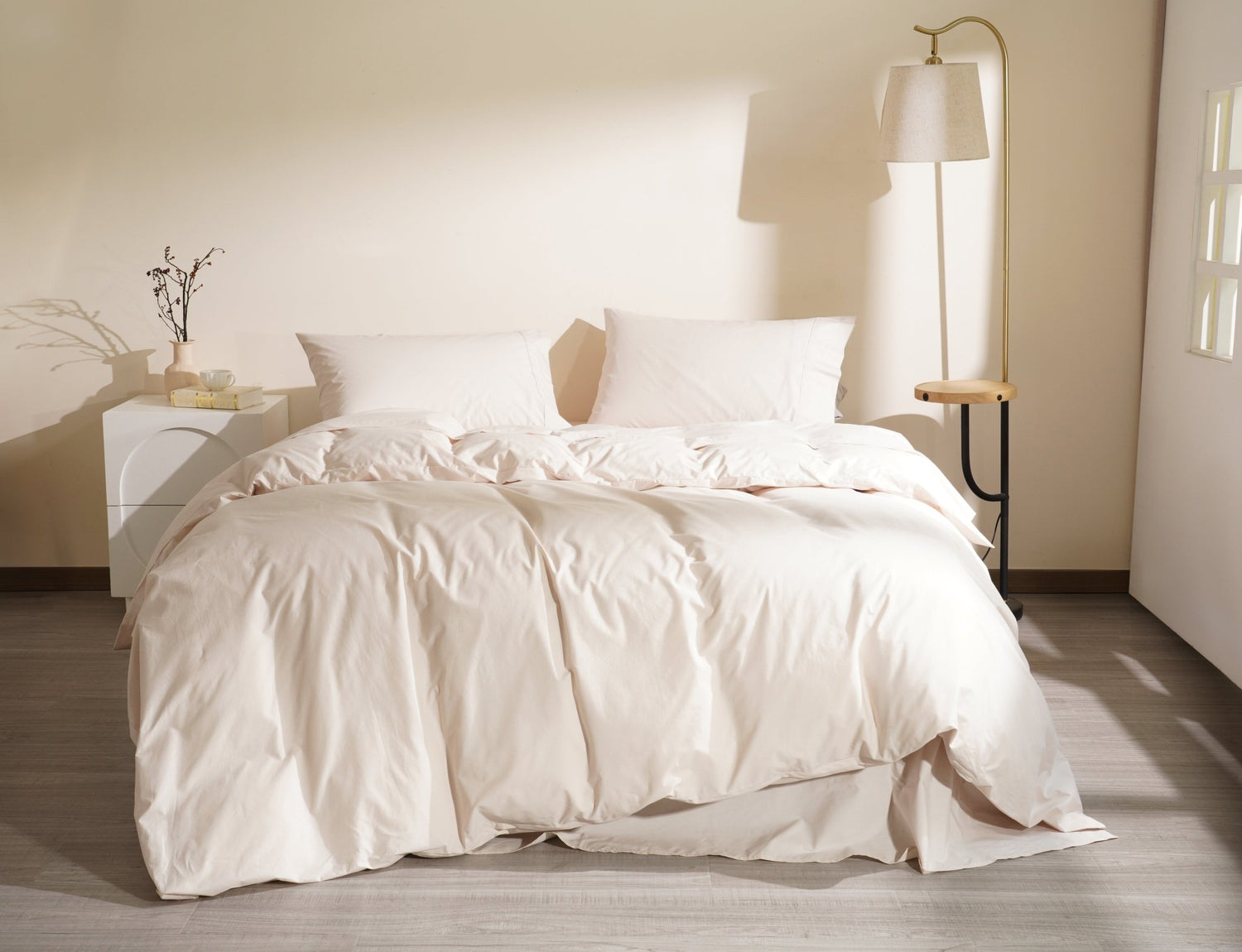
Percale is the classic. It’s the crisp, cool, matte-finish cotton you find in high-end hotels — the kind that feels freshly pressed even when it isn’t. If you’ve ever slept in a really good hotel and wanted to steal the sheets, you wanted percale.
How it feels
Percale has a one-over-one-under weave that creates a crisp, breathable fabric with a matte finish. No sheen, no slipperiness — just clean, cool cotton against your skin. It softens with washing but never loses that satisfying crispness. If sateen is a sports car, percale is a perfectly tailored white shirt. It doesn’t try to impress you. It just works.
Who should buy this
Hot sleepers, first. If you wake up sweating, percale should be your first move before you spend money on a cooling mattress pad. Beyond that, percale is the safest bet for anyone upgrading their sheets for the first time. It’s not dramatic. It’s not polarizing. It’s just really, really good cotton sheets. Start here if you’re not sure what you want.
Temperature
Percale is the coolest-sleeping woven cotton you can buy. The weave structure creates natural airflow between the fibers that denser weaves like sateen can’t match. In warm climates or during summer, percale is the obvious choice. In winter, it’s still comfortable under a good duvet — it just won’t add warmth on its own.
What makes ours worth it
This is 400-thread-count, 100% GOTS-certified organic cotton. GOTS certification means the cotton was grown without synthetic pesticides or fertilizers, and the entire supply chain — from field to factory — meets strict environmental and labor standards. It’s not a marketing badge we bought. It’s an audit trail. The deep pocket fitted sheet fits mattresses up to 16 inches, which covers basically every modern mattress including the thick pillow-top ones.
How to care for it
Wash cold, gentle cycle. Tumble dry low, remove promptly if you want them crisp. Iron on low if you’re that person, but you don’t need to be. No bleach, no fabric softener — softener reduces the breathability that makes percale worth buying in the first place.
Our Organic Percale products: Sheet Set from $88 | Sheet & Duvet Cover Set from $112
The short version
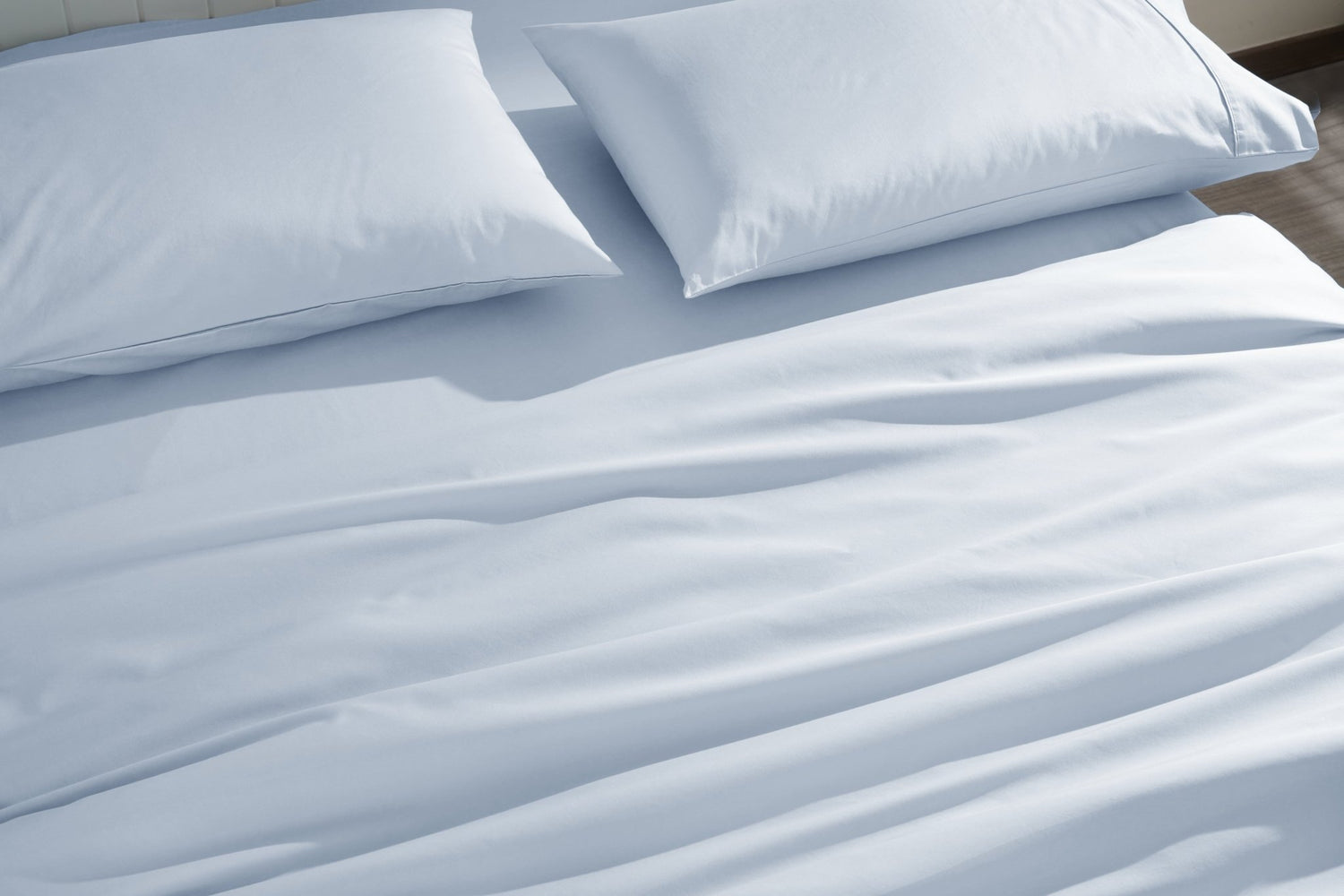
Sateen is the indulgent one. Subtle sheen, buttery smooth feel, and a heavier drape than any other cotton weave. If percale is the crisp white hotel sheet, sateen is the one that makes you cancel your morning plans.
How it feels
Sateen uses a four-over-one-under weave that puts more thread surface on top, creating a smooth, almost silky hand feel with a soft luster. It drapes heavily over the body — you feel wrapped rather than covered. The closest comparison is silk, but sateen is more durable, easier to wash, and a fraction of the price.
Who should buy this
The luxury seekers. Cold sleepers. Anyone who walks into a bedroom and notices how the sheets catch the light. Sateen is also the right call if you’ve tried percale and found it too crisp or too cool for your taste — sateen is the warm, smooth counterpart. One thing to know: if you run hot at night, this probably isn’t your fabric. Look at percale or Tencel instead.
Temperature
Sateen sleeps warmer than percale. The tighter weave traps more body heat, which is a genuine advantage in cooler months or for people who always feel cold in bed. During summer, though, it can feel heavy. Think of sateen as your October-through-April sheet.
What makes ours worth it
This is 100% organic Egyptian cotton — the real thing, not the “Egyptian-style” labeling you see on Amazon. Egyptian cotton has longer staple fibers, which is why it produces a smoother, more lustrous fabric that holds up better over time. The duvet cover has hidden button closures and interior ties so the comforter doesn’t bunch up at 3 AM. Small detail, big difference.
How to care for it
Wash cold, gentle cycle. The one thing with sateen: pull it out of the dryer promptly. If you leave it sitting in a ball, it wrinkles more than percale does. A quick iron on low gives you that perfectly smooth hotel look, but it’s not required. No bleach, no fabric softener.
Our Luxury Sateen products: Sheet Set from $88 | Sheet & Duvet Cover Set from $112
The short version
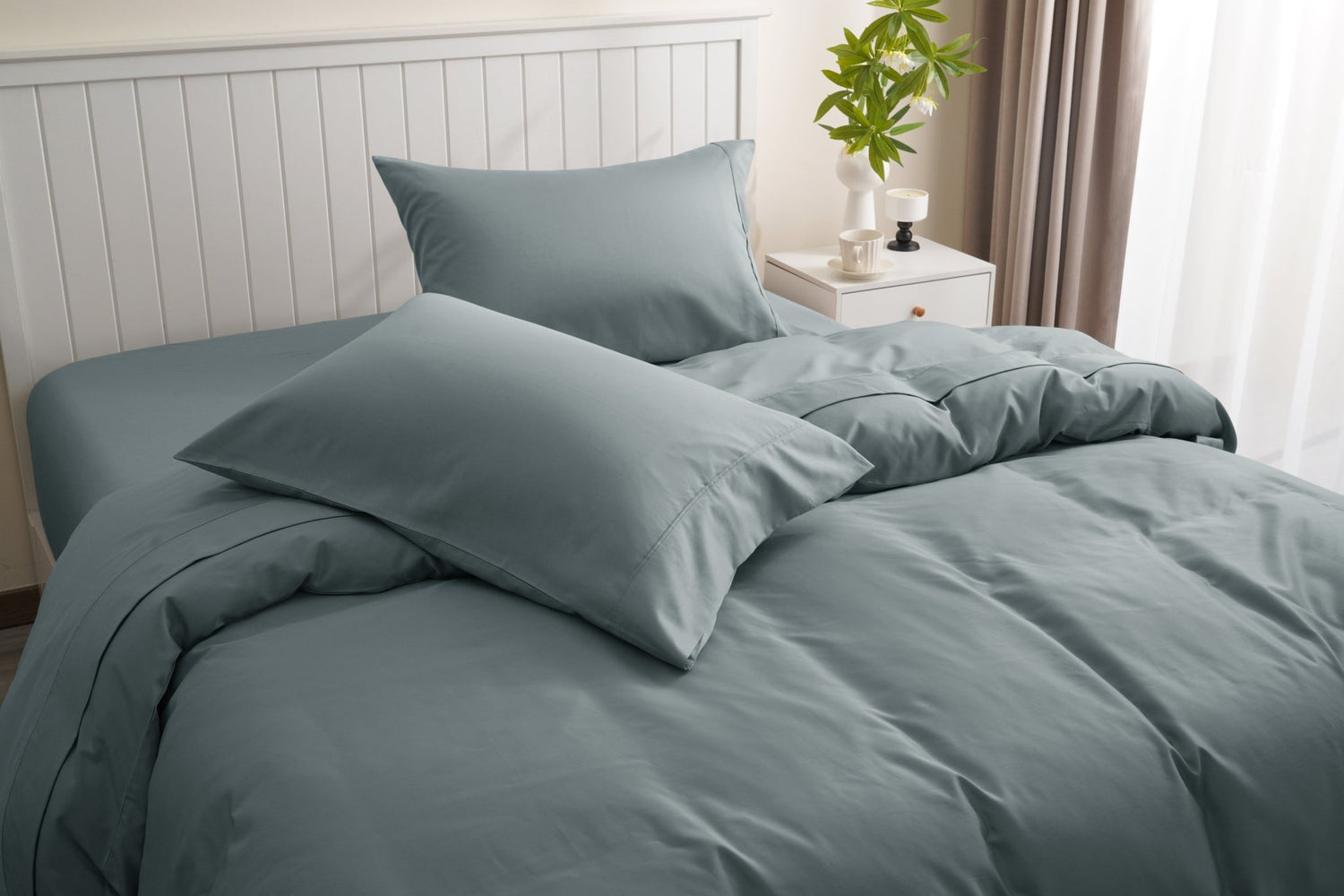
Tencel is made from sustainably harvested eucalyptus wood pulp, and it’s the most technically impressive fabric we offer. Naturally cooling, moisture-wicking, and gentler on skin than any cotton. It sounds like marketing. It isn’t.
How it feels
Tencel has a buttery, almost liquid softness that doesn’t feel like cotton or silk — it’s its own thing. Smoother than percale but without the sheen of sateen. The fibers are smoother at a microscopic level than cotton, which sounds like a trivial detail until you’re someone with eczema who’s tried everything and this is the first fabric that doesn’t irritate your skin.
Who should buy this
Two audiences, mainly. First: hot sleepers who want something softer than percale. Percale is cool but crisp. Tencel is cool and silky. Different experience, same temperature benefit. Second: anyone with sensitive skin, allergies, or eczema. The smooth fiber surface and natural moisture management make a noticeable difference — and we hear this from customers more than anything else we sell.
Temperature
Tencel absorbs moisture 50% more efficiently than cotton and releases it into the air instead of trapping it against your skin. In plain language: you stay dry. This makes it one of the best fabrics for hot sleepers, humid climates, or anyone who wakes up feeling clammy. It’s not a gimmick — the moisture-wicking is the defining feature of the fabric.
What makes ours worth it
The sustainability story here is real and specific. Tencel production uses a closed-loop process where 99% of the solvent is recovered and recycled. The eucalyptus is harvested from certified sustainable forests. Our Tencel is blended with cotton for added durability — pure Tencel can pill over time, and the cotton blend solves that without sacrificing the softness or cooling properties.
How to care for it
Wash cold, gentle cycle, tumble dry low. Tencel resists wrinkles better than cotton, so you probably won’t need to iron at all. No bleach. No fabric softener — not because it’ll damage anything, but because the fibers are already naturally smoother than what softener is trying to achieve. It’s redundant.
Our Tencel Lyocell products: Sheet Set from $88 | Sheet & Duvet Cover Set from $112
The short version
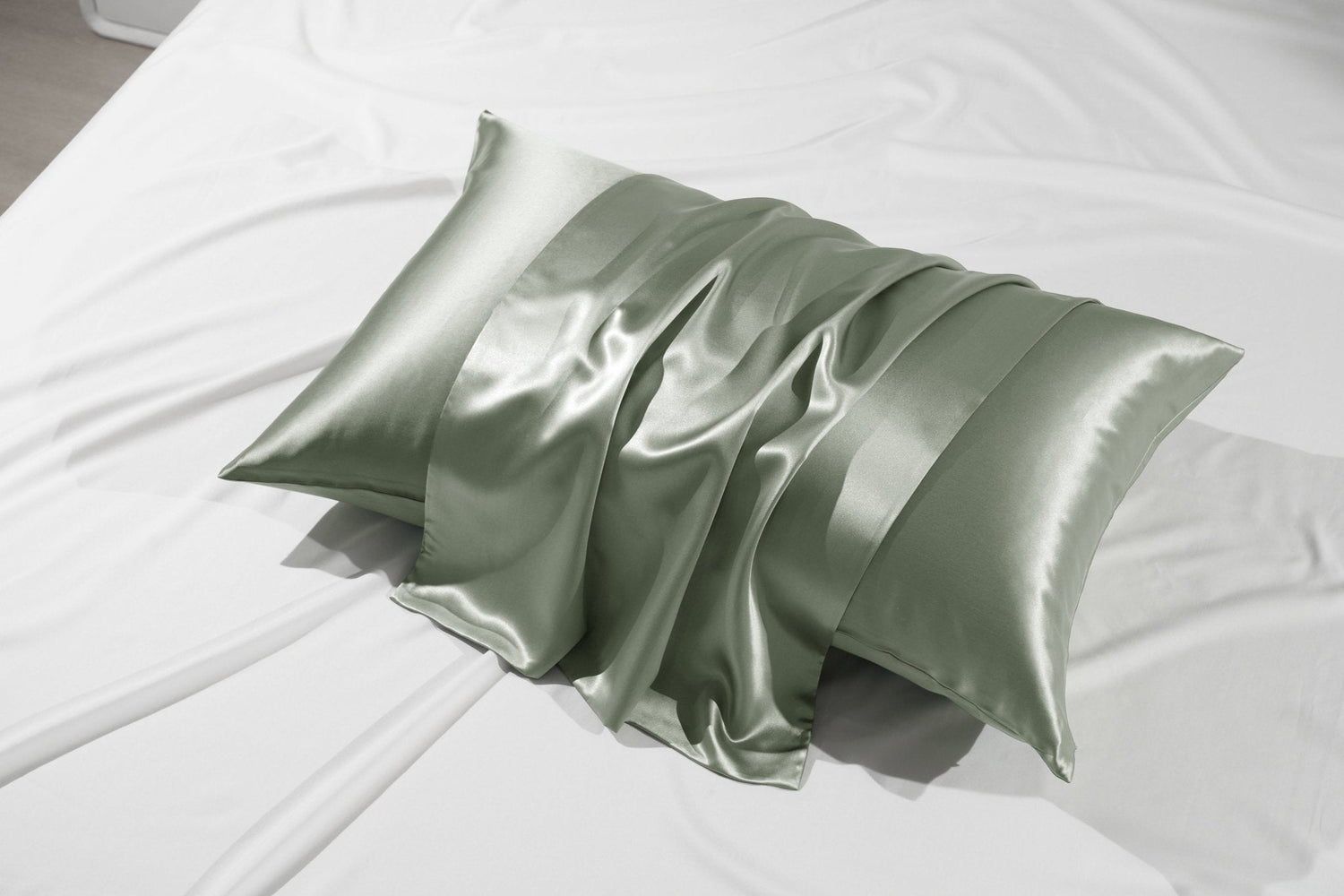
Silk pillowcases aren’t just luxury. They’re functional. Less hair friction means less breakage and fewer tangles. Silk doesn’t absorb moisture from your skin the way cotton does, so your night cream stays on your face instead of your pillowcase. Dermatologists and hairstylists recommend silk for a reason. It actually does what it claims.
How it feels
Mulberry silk is the highest grade available — produced by silkworms fed exclusively on mulberry leaves, which creates longer, more uniform fibers than wild silk. The result is that unmistakable cool, frictionless, smooth surface. You already know what silk feels like in your head. This is that, but the real version, not the polyester “silky” knockoff.
Who should buy this
Start with a pillowcase. Seriously. A silk pillowcase is the single easiest beauty upgrade you can make — you don’t change your routine, you don’t add a step, you just swap your pillowcase and wake up with better hair. It’s also the best gift in our entire collection. Every person we’ve given one to has come back asking where to buy more.
Why it matters for hair and skin
Cotton creates friction. Friction causes breakage, tangles, and those creased sleep lines on your face. Silk eliminates that friction. Your hair glides on it. Your skin doesn’t stick to it. If you use serums or night creams, cotton absorbs a meaningful amount of the product overnight — silk doesn’t. You keep what you paid for on your skin, not your bedding.
What makes ours worth it
There’s a grading system for silk that most brands don’t tell you about. Ours is 6A — the highest classification, based on fiber length, uniformity, and color. The weight is 22 momme, which is the sweet spot: heavy enough to feel substantial and last for years, light enough to stay cool against your face. Below 19 momme feels flimsy. Above 25 is unnecessarily heavy and hot. 22 is where the industry’s best products land, and there’s a reason for that. Hidden zipper closure keeps the pillowcase in place.
How to care for it
This is the one fabric where you need to pay attention. Hand wash cold, or machine wash on the most delicate cycle inside a mesh laundry bag. Use a gentle, pH-neutral detergent — regular laundry soap is too harsh. Air dry, or tumble on the absolute lowest heat. Never wring. Treat it well and it lasts years. Treat it like cotton and you’ll ruin it in a month.
Our Mulberry Silk products: Pillowcase from $45 | Eye Mask $40
Featured collection
-
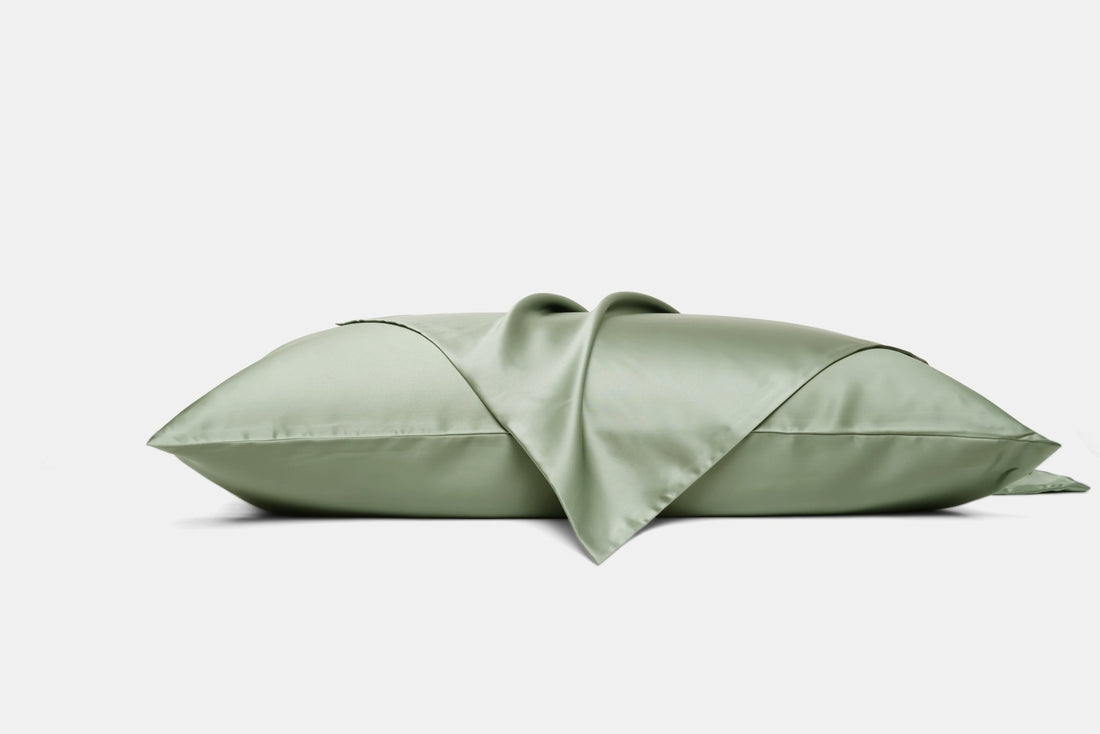 Mulberry Silk PillowcaseMulberry Silk Pillowcase
- Regular price
-
From
$45.00 USD - Regular price
-
$56.00 USD - Sale price
-
From
$45.00 USD
Quick view
-
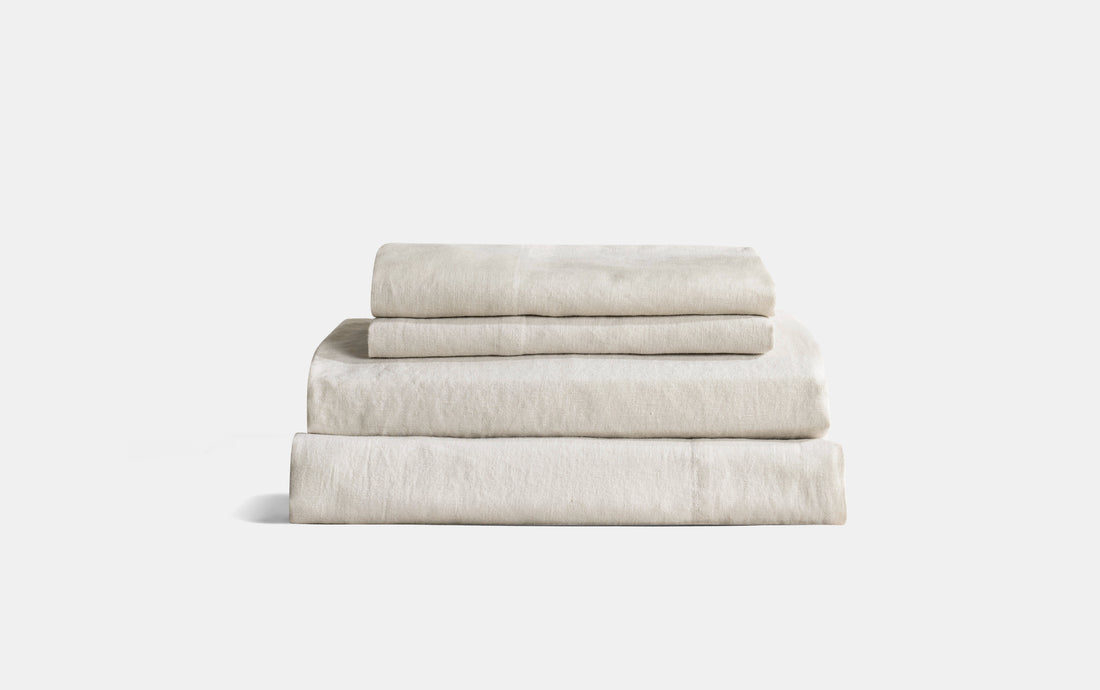 French Linen Sheet SetFrench Linen Sheet Set
- Regular price
-
From
$120.00 USD - Regular price
-
$150.00 USD - Sale price
-
From
$120.00 USD
Quick view
-
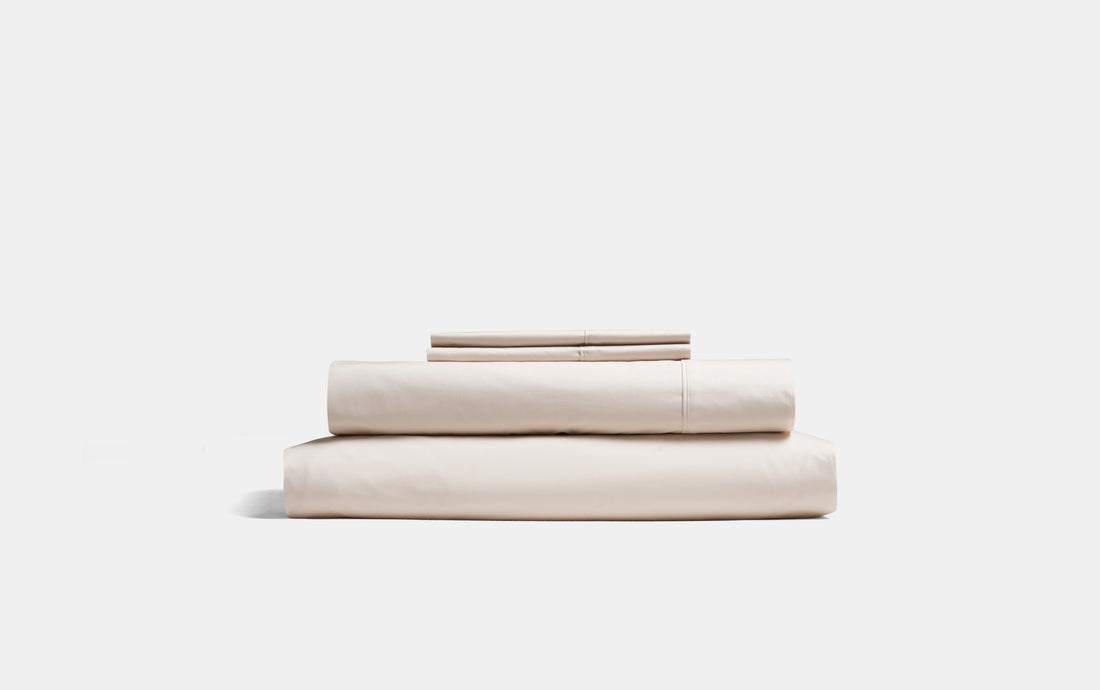 Percale Sheet SetPercale Sheet Set
- Regular price
-
From
$88.00 USD - Regular price
-
$110.00 USD - Sale price
-
From
$88.00 USD
Quick view
-
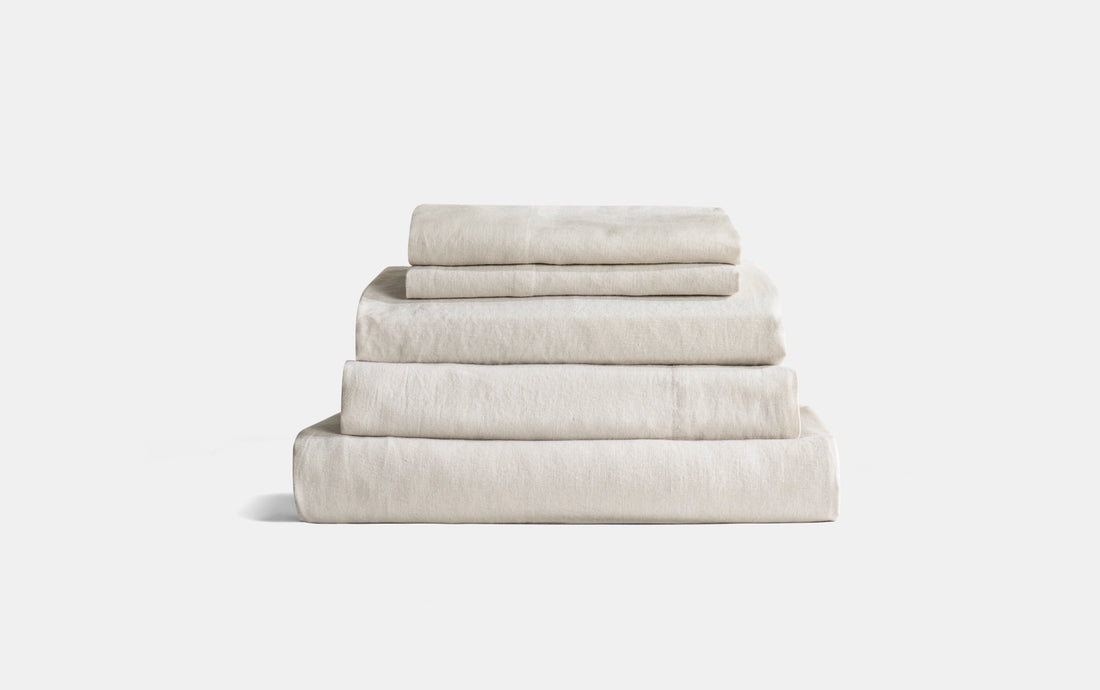 French Linen Duvet Sheet SetFrench Linen Duvet Sheet Set
- Regular price
-
From
$256.00 USD - Regular price
-
$320.00 USD - Sale price
-
From
$256.00 USD
Quick view
-
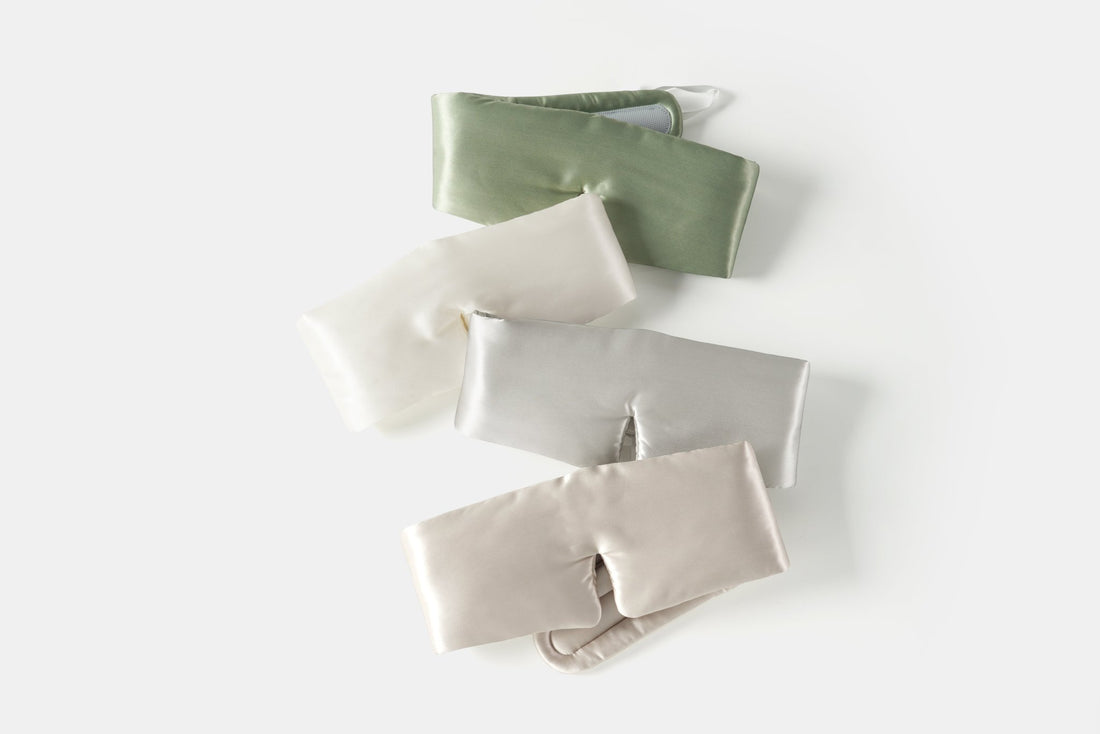 Mulberry Silk Eye MaskMulberry Silk Eye Mask
- Regular price
-
$40.00 USD - Regular price
-
$50.00 USD - Sale price
-
$40.00 USD
Quick view


